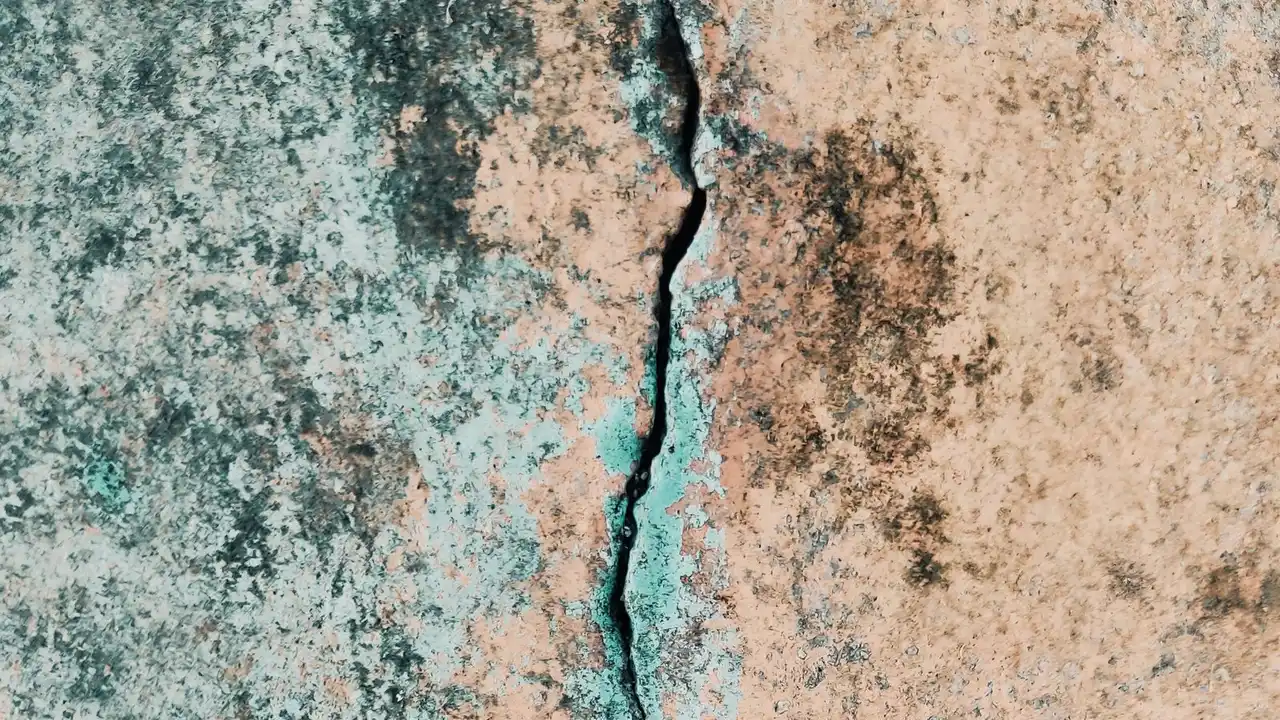
Foundation Crack Repair in Huntsville, AL
You found a crack, and now you're standing there wondering if it's nothing - or the start of something expensive. Here's the honest answer: most cracks are minor, some are serious, and the difference is usually visible to a trained eye in minutes. Foundation Repair of Huntsville inspects foundation cracks across Huntsville for free and tells you plainly which kind you have.
Which Foundation Cracks Are Serious?
A quick field guide before you panic:
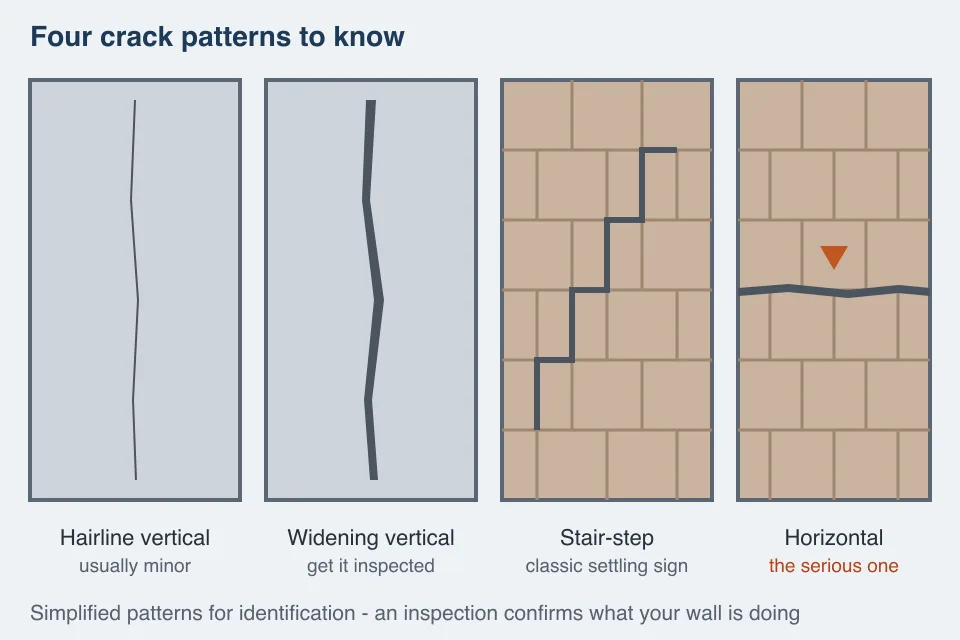
- Hairline vertical cracks (thinner than a credit card) in poured concrete are common as concrete cures and the house settles into place. Usually minor - worth sealing so water stays out, rarely a structural emergency.
- Vertical cracks that keep widening, or cracks wider than about 1/4 inch, deserve a professional look. Growth is the signal that the ground underneath is still moving.
- Stair-step cracks in brick or concrete block - following the mortar joints like a staircase - are a classic sign of foundation settling and shouldn't be ignored.
- Horizontal cracks in a block or basement wall are the serious ones. They usually mean soil and water are pushing the wall inward, and a bowing wall doesn't fix itself.
- Cracks above doors and windows inside the house often trace back to foundation movement below, especially when doors have started sticking too.
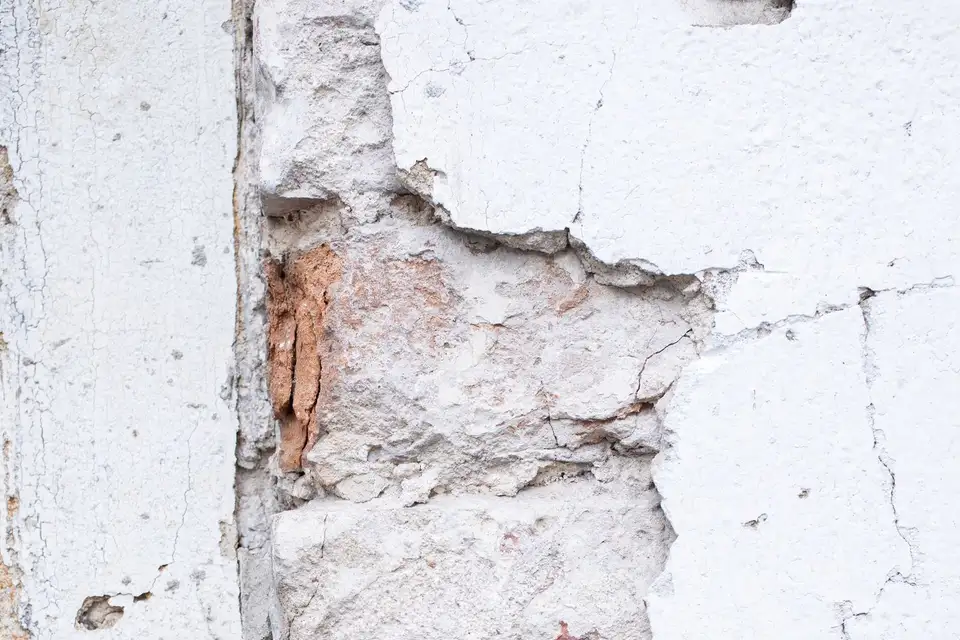
If your crack keeps growing, lets in water, or comes with sloping floors and sticking doors, get it looked at. If floors are the main thing you've noticed, the problem may live under the house instead - see our crawl space repair page.
Why Foundations Crack in Huntsville
Huntsville sits in North Alabama's limestone valleys, where the soil is fine-textured, silty, and rich in clay, according to the Alabama Cooperative Extension System. Clay soil is the restless kind: it swells as it absorbs winter rain and shrinks through dry late summers. That constant expand-and-shrink cycle moves the ground under a foundation a little at a time - and concrete, which is strong but not flexible, eventually cracks where the stress concentrates.
Add our region's karst limestone bedrock - terrain the Geological Survey of Alabama describes as shaped by water eroding the rock underground - plus everyday drainage problems like short downspouts and pooling rainwater, and you have the standard recipe behind most cracked foundations we see.
The good news: because the causes are well understood, so are the repairs.
How We Repair Foundation Cracks
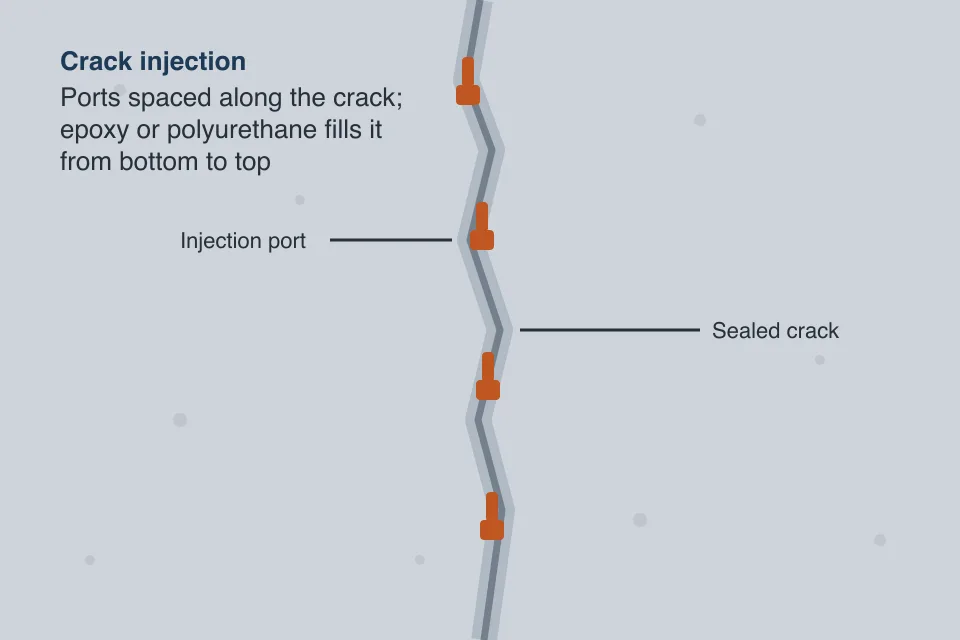
Crack injection (epoxy or polyurethane). For non-moving cracks in poured concrete, the crack is cleaned and injected - structural epoxy welds the concrete back together, while flexible polyurethane seals out water in cracks that see moisture. This is the right fix for most vertical cracks.
Wall reinforcement for bowing or cracked block walls. Horizontal cracks and inward bowing call for reinforcement - typically carbon-fiber straps or steel bracing anchored to stabilize the wall against further movement. Caught early, a bowing wall can usually be stabilized in place.
Piering for settlement cracks. When cracks are a symptom of a sinking foundation, sealing the crack alone treats the wallpaper, not the wall. Steel or helical piers transfer the home's weight down to stable soil or rock, stopping the movement that caused the crack - and often lifting the foundation back toward level. The crack repair then finishes the job.
Drainage correction. Where water is driving the problem, repairs include fixing what the water is doing - grading, downspout extensions, or drainage improvements - so the new repair isn't fighting the same old moisture.
Every repair starts with identifying which of these your home actually needs. That's the point of the free inspection: you get the diagnosis and a written estimate before any decisions.
Get my free crack inspection
Request a Free InspectionWhat Not to Do
Skip the hardware-store patch-and-forget approach for anything beyond a cosmetic hairline. Caulking over a moving crack hides your best early-warning signal while the movement continues underneath. And if a contractor quotes you a major structural repair on the spot without explaining what's moving and why - get a second opinion. (We're happy to be it.)
Frequently Asked Questions
How much does it cost to fix a foundation crack?
Less than most people fear, if it's caught early. Angi's 2026 national data puts simple crack repairs starting around $250, while repairs involving structural work cost more - the national average across all foundation repairs is about $5,176. You'll get your home's actual number in a written estimate after a free inspection.
Can a cracked foundation actually be repaired, or does it need replacing?
The overwhelming majority of cracked foundations are repaired, not replaced. Injection, reinforcement, and piering exist precisely so that homes don't need new foundations. Full replacement is a rare, last-resort scenario.
Will homeowners insurance cover a cracked foundation?
Generally not when the cause is settling or soil movement - standard policies typically exclude earth movement. Sudden, covered events are sometimes different. Check your policy; we'll document the damage clearly either way.
Can I fix a foundation crack myself?
A truly cosmetic hairline crack? A DIY sealant kit can keep water out. Anything wider, growing, stair-stepped, or horizontal belongs with a professional, because the crack is the symptom - the real question is whether the ground under your home is still moving.
What time of year is best for crack repair?
Whenever you find the crack. Repairs happen year-round here; waiting through another wet-winter/dry-summer soil cycle usually means a bigger crack and a bigger bill.
Get a Straight Answer About Your Crack
Send us a photo if you like, or just tell us what you're seeing. We'll inspect it free, tell you honestly whether it's minor or structural, and put the fix - if one's needed - in writing. Call (571) 412-0006.